A New Lens, a Grapevine, and a Little Love in the Wild
There is something exciting about bringing home a new piece of photography equipment. For a photographer, a new lens isn't just another tool to add to the camera bag. It's a new way of seeing the world, a new set of possibilities, and an invitation to slow down and look a little closer at the things we might otherwise overlook.
Recently, I had the opportunity to get my hands on a 500mm f/4 lens, and I couldn't wait to see what it could do.
A lens like this opens up an entirely different world of photography. It brings distant subjects closer, creates beautiful separation between the subject and its surroundings, and offers the opportunity to capture details that might otherwise go unnoticed. Of course, the real excitement isn't about the equipment itself. It's about what happens when the right lens meets the right moment.
And sometimes, that moment is a little more special than you expect.
An Unexpected Moment on the Grapevine
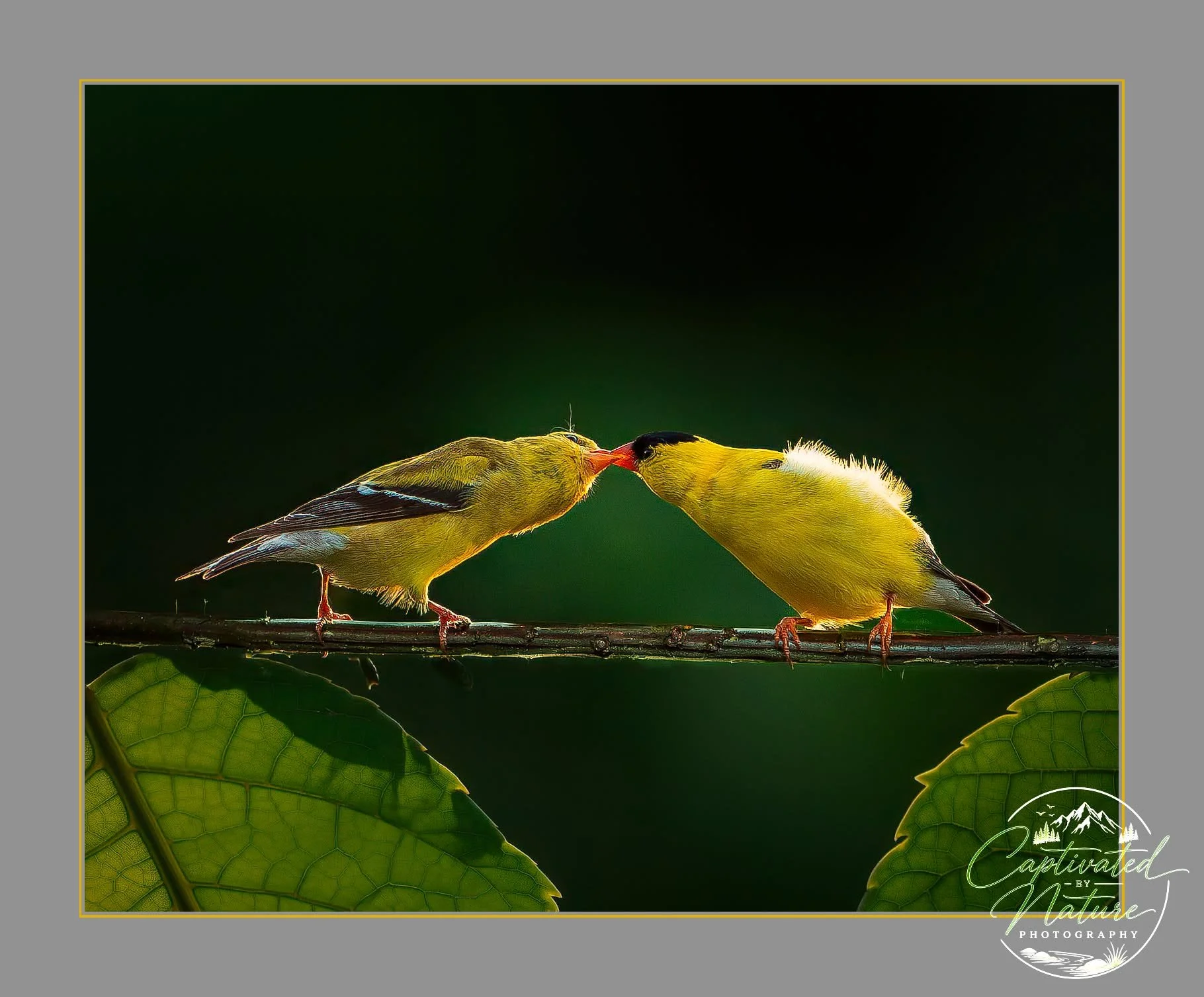
While putting the new lens to use, I came across a scene that caught my attention: two birds perched together on a grapevine.
At first glance, it was a simple moment in nature. A vine, a couple of birds, and the quiet beauty of the outdoors. But the longer I looked, the more the scene seemed to tell a story.
The birds appeared comfortable in each other's company, sharing a small space among the twisting branches and leaves. Their proximity and posture gave the impression of a pair of lovebirds, quietly enjoying a moment together.
I don't know their story. I can't say whether they were a bonded pair or simply two birds sharing a convenient perch. But through the viewfinder, there was something undeniably charming about the scene.
It was a reminder that wildlife photography isn't always about capturing dramatic action, spectacular colors, or rare behavior. Sometimes, the most memorable photographs come from the quietest moments.
Seeing the World Through 500mm
One of the things I love about wildlife photography is how a change in perspective can transform an ordinary scene into something extraordinary.
With a 500mm lens, I could isolate the birds from the surrounding environment and bring attention to the little details: the texture of their feathers, the delicate lines of the grapevine, and the way the natural background fell softly out of focus.
The f/4 aperture offers wonderful creative possibilities, especially when working with wildlife in challenging light or trying to separate a subject from a busy background. Combined with the reach of a 500mm focal length, it provides an opportunity to capture intimate moments without having to get physically close to the animals.
And that's part of the magic.
You can observe without disturbing. You can wait without rushing. You can let nature carry on while you quietly document a small piece of its story.
Of course, a new lens doesn't automatically make a great photograph. Understanding light, finding the right angle, managing depth of field, and waiting for the right moment still matter. The equipment simply gives you another set of tools to work with.
The photographer still has to see the picture.
A Little Reminder About Love in Nature
What struck me most about this photograph wasn't the technical performance of the lens. It was the feeling the image seemed to convey.
There was something peaceful about seeing two birds together on that grapevine. In a world that often feels rushed and noisy, the scene offered a brief reminder that there is beauty in simply being present.
We often associate wildlife photography with the excitement of spotting something unusual or capturing a split-second action shot. Those moments are wonderful, but quieter encounters can be just as rewarding.
A pair of birds sitting together. Sunlight filtering through the leaves. A gentle breeze moving the branches.
Nothing extraordinary had to happen for the moment to feel special.
Sometimes, all it takes is the opportunity to notice.
The Beginning of a New Photographic Adventure
Getting a new 500mm f/4 lens has me excited about the possibilities ahead. There will be more birds to photograph, new behaviors to observe, changing seasons to explore, and countless opportunities to practice the craft.
I'm looking forward to discovering what this lens can do, but I'm equally excited about the moments I haven't planned for yet.
Because that's one of the greatest things about photography: you can head outside looking for one thing and come home with something entirely different.
This time, it was a grapevine and two birds that looked like they might have a little love story of their own.
And for a first outing with a new lens, I couldn't have asked for a more charming introduction.
**Sometimes, the best photographs aren't just about what we see. They're about what a

Foy’s Lake
Foy’s Lake, Kalispel Montana
Discovering the Unexpected: A Photographer’s First Trip to Montana
I still remember the first time I set foot in Montana—the anticipation, the weight of my gear, and the sense that I was finally checking off one of those bucket-list destinations that every landscape photographer dreams about. Big Sky Country is famous for its sweeping views, endless horizons, and dramatic mountain ranges, and I went in fully expecting to leave with memory cards filled with images from Glacier National Park.
And Glacier did not disappoint. The rugged terrain and otherworldly light were everything I hoped for. But what I didn’t expect was that one of the most memorable images of the trip wouldn’t come from the famous overlooks or well-known scenic drives—instead, it came from a place I discovered almost by accident: Foy’s Lake.
Foy’s Lake isn’t typically the first stop you see highlighted in Montana travel portfolios. It’s a quiet, lesser-known spot that many visitors pass by without even realizing it’s there. But sometimes the best photographs happen not because we’ve planned them, but because we’re paying attention when something unexpected catches our eye.
I arrived at the lake right as the light was beginning to shift—one of those moments when you know you need to work fast, yet also slow your mind down enough to truly see. I set up my tripod, locked in the camera, and then… I waited.
Before clicking the shutter, I sat still for several moments just taking in the scene. The water was so clear it was difficult to gauge just how deep it truly was. There was a quiet stillness in the air, a sense that this place had been here a very long time and had no need to advertise itself. I found myself thinking less about capturing an “epic shot,” and more about what I wanted the image to say.
What does untouched nature feel like?
How does a quiet moment convey its power?
How often do we rush from landmark to landmark, hoping the next view will be “the shot,” while the hidden treasures reveal themselves only when we slow down?
On that shoreline, I realized that photography is not just about documenting a landscape—it’s about listening to it. Every photograph is a translation of a moment in time, and Montana was reminding me to be present enough to receive it.
When I pressed the shutter, I wasn’t just taking a photo. I was capturing the calm, the clarity, and the surprise of finding something beautiful where I least expected it.
Sometimes the picture we remember most isn’t the one we set out to take—it’s the one we were fortunate enough to stumble upon.